Sioux Falls Sump Pump Discharge: What Homebuyers Should Know
Home Inspection Tips
Where Does That Sump Pump Actually Send the Water?
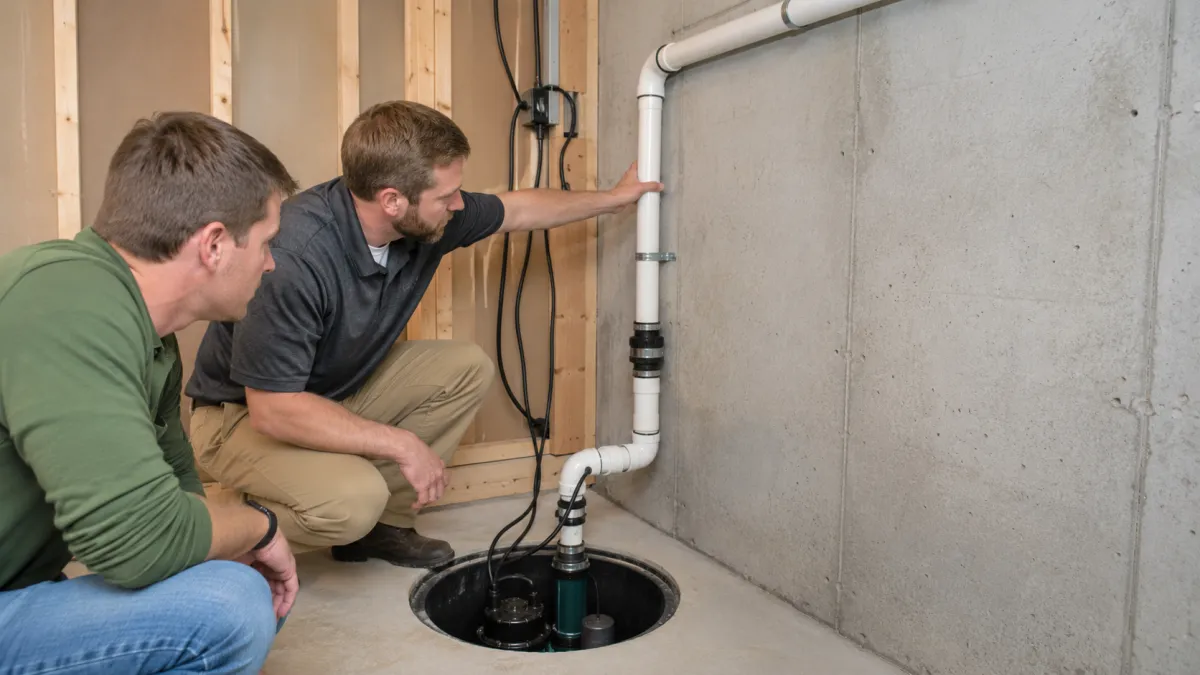
A realistic horizontal basement scene showing a clean sump-pump pit with a visible discharge pipe leading toward the exterior wall. A home inspector points at the pipe while a buyer watches. Natural utility-room lighting, accurate plumbing, no flooding and no text.
A sump pump can be easy to ignore when the basement is dry. The more important question is what happens after the pump turns on: where does the water go?
In Sioux Falls, a sump-pump discharge line should not be connected to the sanitary sewer. The City's sump-pump guidance explains that improper connections can add water to the sanitary system and contribute to sewer backups during periods of heavy rain.
Where the water should go
The City identifies several acceptable destinations: the stormwater system or street gutter, an approved sump-pump collection system, or the lawn. The setup still needs to discharge water without creating a nuisance, sending water back toward the foundation, or affecting a neighboring property.
Discharging a sump line into the sanitary sewer is a violation of City ordinances. Sioux Falls also operates an inspection program, and violations may result in fines determined through the court system.
What buyers should examine
Start at the sump pit. Look for a pump that is securely installed, a cover where appropriate, a check valve, and a discharge pipe that can be followed toward the exterior. If the line disappears into a floor drain or another plumbing connection, do not guess where it leads.
Outside, locate the outlet and look at the surrounding grade. Water should move away from the foundation rather than cycling back toward the home. Watch for low areas, erosion, disconnected hoses, staining, or a line positioned where freezing could obstruct it.
A dry basement does not prove the system works
The pump might not have operated recently, or the home may have been shown during dry weather. Ask whether the seller has replaced the pump, experienced water intrusion, installed battery backup, or connected to a neighborhood collection system. An inspector can test accessible components, but conditions and inspection scope vary.
Sioux Falls reports more than 114 miles of sump-pump collection pipe within the broader stormwater system. That does not mean every property connects to one, so the specific setup at the house still needs to be verified.
When to bring in a professional
If the discharge route cannot be confirmed, ask a qualified plumber or appropriate drainage professional to evaluate it. The City's Engineering Division can answer questions about the municipal inspection program and collection systems. Confirming the route before closing is much easier than discovering an improper connection during the next heavy rain.
The Bottom Line
A functioning pump is only half of the system. Buyers should also confirm where the water goes, whether the discharge complies with local requirements, and whether it moves water safely away from the home. For help planning your Sioux Falls inspection and purchase. Reach out to timrealtor.com/contact-us.