Did Summer Storms Damage Your Roof Before You Bought the House?
HOME BUYING TIPS | HOME SELLING TIPS
Did This Summer's Storms Damage the Roof Before You Bought the House?
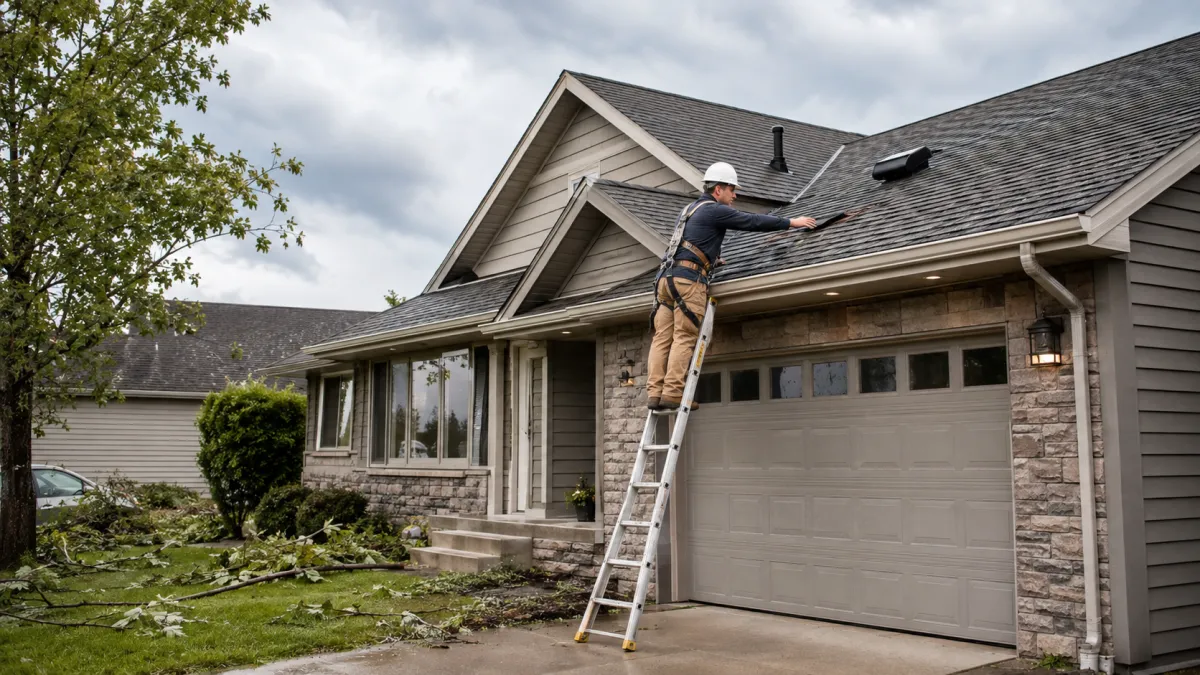
A roof can look normal from the driveway and still have storm damage, lifted shingles, loosened flashing, or a repair history that deserves a closer look. That matters in the Sioux Falls area after a summer that brought several rounds of strong wind and severe weather.
On July 25, 2026, storms produced wind gusts estimated or measured between 75 and 90 miles per hour in parts of the region. The National Weather Service reported some of the strongest winds in the Sioux Falls metro, along with tree, fence, roof, and structural damage.
Prefer the quick version? Watch the video below for a short overview of what Sioux Falls buyers and sellers should know about storm-related roof damage.
The Ground-Level View Is Not Enough
Missing shingles are easy to notice. Other problems may be less obvious: creased shingles, exposed fasteners, damaged vents, displaced flashing, soft decking, or impact marks. A roof that appears acceptable in listing photos may still need a qualified inspection.
Buyers can ask about the roof age, recent inspections, repair invoices, warranties, and any storm-related work. If a seller says the roof was repaired or replaced, documentation can help establish what was completed, when it was completed, and by whom.
Ask About Insurance and Completed Repairs
An insurance claim and a completed repair are not the same thing. The South Dakota Division of Insurance explains that if an insurer previously paid for roof damage and the owner did not complete the repair, the company may not be obligated to pay for the same damage again.
For buyers, that makes repair records important. For sellers, it is a reason to keep estimates, paid invoices, completion photos, permits when applicable, and insurer correspondence organized before listing.
Understand the Type of Coverage
Homeowner policies do not all value roof losses the same way. Replacement-cost coverage generally pays to repair or replace damaged property with materials of similar kind and quality, subject to the policy and deductible. Actual-cash-value coverage accounts for age and depreciation, which can leave the homeowner paying more out of pocket. The National Association of Insurance Commissioners explains the difference and recommends reviewing the policy details.
A buyer should obtain an insurance quote early enough to learn whether the roof age, condition, claim history, deductible, or coverage form affects insurability or cost. The insurance agent, inspector, and lender each answer different questions; none should be assumed to replace the others.
A Practical Plan for Buyers and Sellers
Buyers should use the inspection period and contract terms to evaluate the roof, review available documentation, and decide whether additional evaluation is appropriate. Sellers who suspect storm damage should address it before listing when possible, document the condition, and avoid waiting for a buyer inspection to uncover an unresolved issue.
Neither a newer-looking roof nor an insurance claim automatically tells the full story. What matters is the present condition, the work actually completed, and the coverage available to the next owner.
Bottom Line
After a severe-weather season, the roof deserves more than a quick look from the sidewalk. Ask questions, review records, use qualified professionals, and understand the insurance implications before closing. Reach out to us at timrealtor.com/contact-us.