Asbestos in Older Homes: What to Know Before Renovating
Older Homes | Renovation Safety
Planning to Remodel an Older Home? Do Not Disturb This Material First
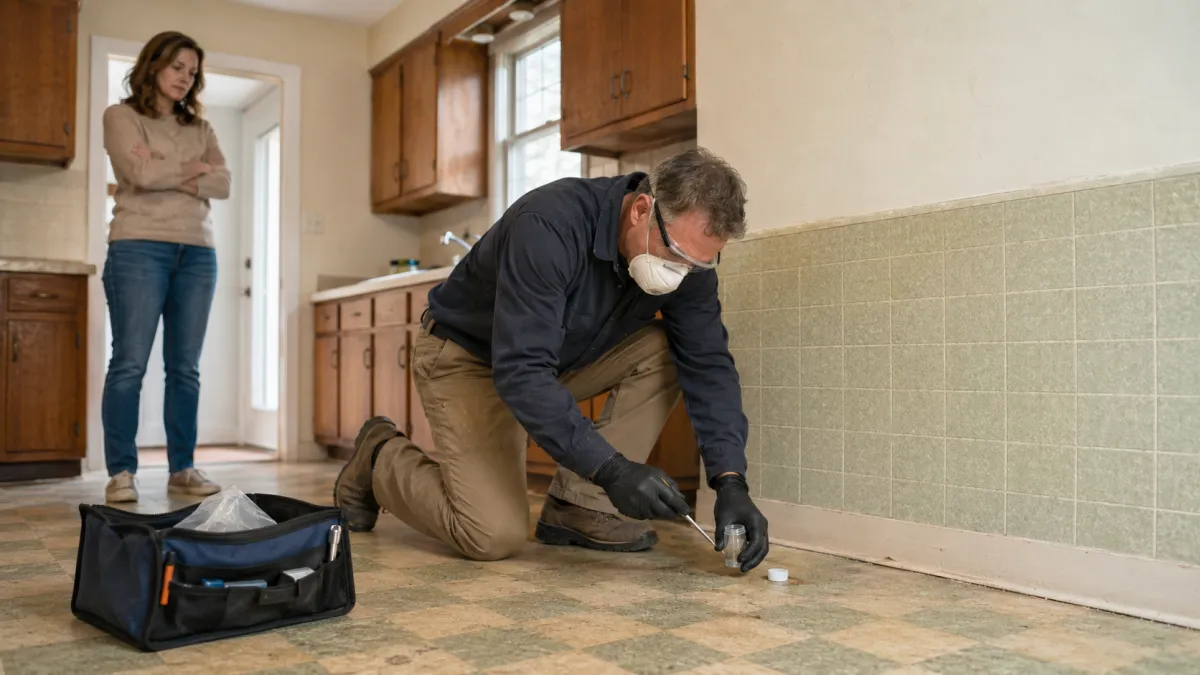
A hyper-realistic horizontal photo of an older Midwest kitchen being prepared for renovation. A contractor has stopped before removing vintage floor tiles and is placing a small sample container and protective equipment nearby. No exposed airborne dust, no hazard symbols, no text.
An older kitchen or basement can inspire big renovation plans. Before pulling up flooring, opening walls, or removing insulation, however, buyers and homeowners should consider whether the material may contain asbestos.
The City of Sioux Falls warns that asbestos may be present in roofing and flooring materials, shingles, drywall, ductwork, plumbing materials, fireplace components, and other products. You cannot determine whether a material contains asbestos simply by looking at it.
Why renovation changes the risk
Material that remains intact and undisturbed may present a different situation from material that is cut, sanded, scraped, broken, or demolished. Renovation can release small fibers into the air if asbestos-containing material is damaged.
The U.S. Environmental Protection Agency advises homeowners not to touch suspected material. If renovation will disturb it, testing and professional guidance should come before demolition begins.
Do not rely on appearance
Vintage floor tile, pipe insulation, textured material, and old adhesive may look ordinary. A visual home inspection can identify areas worth investigating, but laboratory analysis is generally needed to determine whether a specific material contains asbestos.
This does not mean every older property contains asbestos or that every unusual material is dangerous. It means uncertainty should be handled with testing rather than a guess, especially when the renovation plan will disturb the material.
Ask about the renovation plan before buying
If your offer depends on removing walls, replacing floors, or renovating a basement immediately, discuss that plan during the inspection period. Ask about earlier testing, professional abatement, renovation invoices, and any available records. Confirm whether the planned work requires additional evaluation, permits, or specialized disposal.
Testing and abatement can affect a renovation budget and schedule. Learning about the issue before closing allows a buyer to evaluate the full project instead of budgeting only for cabinets, flooring, and finishes.
Use qualified help
The EPA recommends using properly trained and accredited asbestos professionals for sampling and corrective work. Sampling the wrong way can create unnecessary exposure, and removal is not automatically the correct response for every intact material.
A qualified professional can identify the appropriate next step, which may involve leaving sound material undisturbed, sealing or enclosing it, or completing controlled removal and disposal. The right response depends on the material, its condition, and the work being planned.
The Bottom Line
Do not let an exciting renovation begin with an avoidable hazard. If suspicious material may be disturbed, pause and obtain qualified guidance before demolition. If you are searching for an older Sioux Falls home and want to build the right inspection questions into your offer contact timrealtor.com/contact-us.